

New England Literacy Resource CenterAdult Education CollaborativeSkip Navigation


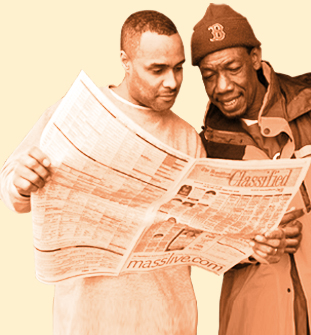
Publications and Online CollectionsTwo men reading newspaper

Integrating Civic Participation and Adult ESOL

Andy Nash, New England Literacy Resource Center/World Education

January 2005

Abstract

This article proposes a process for building ESOL students’ capacity for engaged and active citizenship through which EL/Civics classes serve as a venue for not just comprehending, but also critically examining policies and systems that affect students’ lives. It draws on years of work with ESOL providers, the Equipped for the Future citizen/community member role map, and a theoretical framework that describes three kinds of citizens: personally responsible, participatory, and justice-oriented citizens. The process guides educators to approach every teaching context as having the potential to foster all three kinds of citizenship, and encourages the exploration of possibilities at every level of English proficiency. It honors the lifetime of experience as community members that immigrants bring to each new civic task in this culture. The author lays out the process in a series of steps with specific suggestions for classroom activities and examples from teachers with whom she has worked.


Current Approaches to EL/Civics Instruction

In 2000, the US Department of Education targeted funding to a new program called English Literacy and Civic Education (EL/Civics), prompting a notable national increase in interest from ESOL programs to incorporate civics into their curricula. Provided a very general definition by the Department, and given little direction due to the more pressing accountability priorities of the federal funders (as outlined by the Workforce Investment Act), the field has had considerable leeway in interpreting and implementing the program.


The US DOE describes model EL/Civics programs this way:

“These educational programs emphasize contextual instruction on the rights and responsibilities of citizenship, naturalization procedures, civic participation, and U.S. history and government in order to help adult students acquire the skills and knowledge to become active and informed parents, workers, and community members” (www.ed.gov/programs/elcivics/resources.html accessed on January 18, 2005).

And the Department notes that effective civics materials address:

“ߪexpanding English language skills through problem-solving activities, understanding local resources and services, citizen instruction, integrated English language and civics tutoring, computer literacy for immigrants, curriculum and professional development” (www.ed.gov/programs/elcivics/index.html accessed on January 18, 2005).

Despite having a great deal of room to interpret what this means, a review of state EL/Civics websites, curricula, and the national ESOL on-line discussion list suggests that most programs have gone the route of 1) embellishing the life skills components of their curricula, making sure they include support for understanding and navigating the public institutions (schools, the DMV, USCIS, post office, etc.) that immigrants interact with regularly, and 2) enhancing their ability to prepare immigrants for the citizenship process – particularly the history and government content of the citizenship test and the civic rights and responsibilities that new citizens will have once passing that test.

While these are important areas of concern for immigrants, neither introduce newcomers to democracy in action, which includes thinking about the policies that shape our daily lives, considering whose needs they serve, and learning how citizens together can impact civic decisions. Today’s curricula devote valuable attention to learning how to access information and services, but little to why so many are in need of services.


Promoting Civic Literacy and Participation in New England

The New England Literacy Resource Center (NELRC) at World Education has been supporting efforts by adult literacy and ESOL programs to engage students in civic participation projects since 1996. Whether to prepare adults to be informed voters or to help them develop the knowledge and skills needed to participate in community efforts, small groups of educators have come together to explore the possibilities of integrating civic participation and adult education. With support from the Lincoln and Therese Filene Foundation, NELRC developed the “Civic Participation and Community Action Sourcebook,” and provides technical assistance to practitioners who want to address civic participation through classroom projects or community collaborations. This paper outlines NELRC’s efforts to develop a guiding process for civic participation projects that reflects the lessons learned from dozens of past projects. The model is informed by current discussions in civic education, developments in adult learning theory and research, and our own work with a diverse set of adult programs, including citizenship, ABE, ESOL, and bilingual ESOL classes.


The Aims of Civic Education

While there has been general consistency in how EL/Civics programs have interpreted civics, outside of adult education there is an active dialogue about the aims of civic education (in K-higher education) and the best practices for achieving those aims. The debate rests, largely, on two underlying schools of thought about what constitutes “democracy.” The procedural view focuses on the form and process of government – the rules and procedures by which decisions are reached. Procedural democracy emphasizes the principles of universal participation, political equality, majority rule, and responsiveness by a representative government. It is concerned with maintaining active and equal participation among the electorate.

The substantive view concentrates on the impact of government actions – that is, whether or not government policies fulfill the democratic ideals of fairness and justice. It is concerned with the undemocratic outcomes that may result from democratic processes – for example, majority rule that denies certain groups their human rights; technically democratic elections where only a minority of the population votes; or a “free press” that is actually owned by a small concentration of media corporations.

These competing views of democracy then impact how we define citizenship*. Surdna Foundation researchers Joel Westheimer and Joseph Kahne have identified three kinds of participant citizens, which are described in Kevin Mattson’s book, Engaging Youth: Combating the Apathy of Young Americans toward Politics. The researchers distinguish between a ‘personally responsible citizen,’ a ‘participatory citizen,’ or a ‘justice-oriented citizen.’ The first ‘works and pays taxes, obeys laws, and helps those in need during crises such as snowstorms and floods.’ The second ‘actively participates in the civic affairs and the social life of the community at local, state, and national levels.’ The third ‘critically assesses social, political, and economic structures and explores collective strategies for change that challenge injustice and, when possible, addresses root causes of problems (Mattson: 42).

The majority of civics education materials available in adult education reflect the first two notions of citizenship, both of which prepare people to participate in the system as it is, accepting it as an effective, functional process. The third notion breaks with this assumption by expecting citizens to critically analyze and question the structures that are set up to make decisions about their lives. Merrifield, paraphrasing Gaventa (1999) adds “that development of critical consciousness is also essential for full citizenship. An underlying critical or questioning stance, an attitude of inquiry, a skepticism toward authority, can be seen as an underlying disposition that is essential to democratic participation and protection of freedoms (Merrifield, 6). She goes on to suggest that what should perhaps be central in citizenship education is preparation for dealing with conflictual relationships and facing difficult choices in complex societies (Merrifield, 21). In our work, we have used this civics literature as a reminder to be explicit about our own definitions of citizenship, and to evaluate the ways our instruction does or does not build the capacity of all three types of citizens.


Adult Learning and Civic Education

Merrifield’s attention to skills that go beyond the traditional EL/Civics curriculum is mirrored in the National Institute for Literacy’s system reform initiative called “Equipped for the Future” (EFF). That effort has identified 16 skills, including "Advocate and Influence," "Learn through Research," "Resolve Conflict and Negotiate," and "Cooperate with Others," that underlie the ability to effectively carry out key activities in the adult roles (worker, family member, and community member/citizen). The activities associated with the community member/citizen role were identified through structured feedback sessions with 257 adults engaged in a variety of civic activities and organizations. The consensus “role map” that emerged includes such items as:

  • Figure out how the system that affects an issue works
  • Find, interpret, analyze, and use diverse sources of information, including personal experience
  • Strengthen and express a sense of self that reflects personal history, values, beliefs, and roles in the larger community
  • Reflect on and reevaluate your own opinions and ideas
  • Influence decision makers and hold them accountable

What this suggests is that the unofficial curriculum content that student-centered educators have regularly included in their lessons – speaking up for one's rights, self-advocacy, preserving important aspects of one's culture and identity – should be recognized as legitimate course goals equal to the communication skills and competencies that currently anchor EL/Civics curricula.

EFF also offers useful guiding principles, based in research on adult learning and cognition that supports the following:

  • that adults have purposes for learning and need to see the relevance of their instruction to those purposes
  • that we use skills and knowledge contextually; the situation we’re in and what we’re trying to accomplish determine how we apply the skill (writing an absentee note to a child’s principal would call upon different writing strategies than writing a grocery list, for example)
  • that adults bring a great deal of experience of life, language, and learning which can be transferred to new contexts if made explicit and transparent (metacognition)

These principles offer us some direction in how to effectively integrate language education with civics education. They suggest that we use relevant civics/community themes and activities as the context in which we can build on the “lived” prior knowledge of students to prepare them for new linguistic and cultural challenges. Immigrant and refugee adults have a lifetime of experience as citizens and community members that they bring to each new civic task in this culture. Their experiences, assumptions, and expectations need to be explored as they figure out how to apply their skills to the new context. Based on past experience, what does it mean to be a citizen? To live in a democracy? What do they expect interactions with the police, schools, government, etc. to be like? How did they participate in their communities before and how might they now? In valuing the prior knowledge and experience that adults possess, EFF encourages us to reflect on and compare diverse ideas and opinions and, by extension, to question single or simple explanations of the world. This stance of critical inquiry underlies the justice-oriented notion of citizenship.

Programs we’ve worked with have drawn from these EFF tools and principles to help them frame instruction that builds concrete language skills in the context of exploring important real-life issues.


Lessons Learned from the Field

Our experience at NELRC providing technical assistance, facilitating workshops, guiding sharing groups, and developing materials with EL/Civics programs indicates that it’s possible to address all three types of citizenship (personally responsible, participatory, and justice-oriented) at all levels of the curriculum. Yet most programs approach them as though they emerge in a predictable developmental order. The usual sequence is that adults with the most limited English are taught the basic legal and cultural expectations of their new community in order to be a ‘personally responsible citizen.’ As they become better oriented to the society (and often for purposes related to their children), they move on to content that supports their participation in local activities and obligations such as school events. Those working toward legal citizenship, in particular, learn about exercising their civic rights and responsibilities. The themes concerning ‘justice-oriented citizens’ (current events, social policies, community concerns, etc.) are typically deemed too abstract and distant from daily demands to keep lower-level students engaged, and often do not appear, if at all, until intermediate levels.

This is, however, a generalization that gets challenged when students find the issues compelling enough, as they did after 9/11 and after the invasion of Iraq, when one teacher’s high beginner class found ways to discuss the role of a good leader, the causes of terrorism, and paths to peace (see Kelly Martin’s piece at www.nelrc.org/civicsteachers/iraq.htm). And in classes that incorporate bilingual discussion (which then becomes the basis for practice in English), beginning English students have ventured into such areas as police involvement in drug trafficking, global trade, and housing discrimination. We approach every teaching context as having the potential to foster all three kinds of citizenship, and encourage the exploration of the possibilities at every level. Many of the civic participation projects that we’ve learned from are posted on our website at www.nelrc.org/cpcc/index.htm.


An Evolving Model

Based on the lessons learned from EFF, civics education, and an ever-growing library of civic participation projects, the NELRC has documented a guiding process that aims to develop the qualities of all three types of citizens. We support a process that:

  • orients newcomers to their communities
  • deepens understanding of issues
  • increases the ability to articulate ideas and opinions and to listen to others
  • engages adults in weighing options and making informed choices
  • creates possibilities for community, inside and outside the classroom, and
  • develops skills and knowledge that can be transferred to new situations

Laying the Groundwork
In order to sustain student interest in civic participation, we believe that educators need to engage students in more than problem-solving – they need to build a sense of connection to others and an experience of people working together to make a difference. Teachers that nurture community in their classes, organize activities that invite students to get to know one another, value students’ interpretations of this culture and their own cultures, act as co-investigators in the inquiry rather than experts, and celebrate student discoveries as well as student products, have typically reported greater student engagement in projects. These teachers demonstrate that fostering relationships is as important as getting things done or, perhaps, that one can’t be done without the other.

Our ultimate goal is informed involvement in civic life. Project-based learning, which is explicitly organized around the creation of a product or performance that will be shared publicly, offers a very helpful structure for this purpose. Having a concrete goal can keep the learning process focused and offers a satisfying sense of accomplishment and completion. However, in adult education settings, where time or student interest may be limited, civic learning can be inadvertently shortchanged in the interest of completing a product. Teachers facilitating civic participation projects should be careful about keeping the focus on informed action based on well-considered conclusions. If time is a limiting factor, the class might explore a current issue/event (civil liberties after 9/11, current immigration proposals, etc.) that helps students understand what is happening around them and why, without necessarily carrying out a full project.

For those whose teaching contexts do support project work, we have articulated a 10-step process gleaned from the trial and error of dozens of classes. We are not convinced that a single sequence always prevails and encourage practitioners to move the pieces around to suite the situation. The most recent version of the full process, intended for intermediate English learners, follows. For more beginning students, the process can be simplified by reducing the amount of planning and documentation done by the students, and by keeping the action step (step 5) simple.

The Process

1. Identify student concerns and the communities they care about. Select an issue to focus on. Underlying effective civic participation are the capacities to understand and articulate one’s own beliefs, to listen to others, and to appreciate the complexity of social issues beyond simple black and white answers. In the spirit of building these skills and dispositions – and I imply here that we all need reinforcement in these areas, not that immigrant adults are lacking in them – many instructors have found it useful to start off with discussions of key terms such as “community,” “citizen,” “freedom,” or “democracy,” which allows students to compare their understandings, experiences, and expectations, and sets a big picture context for thinking about civic involvement. Others have started by creating democracy in their classrooms, involving students in setting up structures for decision-making about project topics and activities. Such activities model the importance of an inclusive, respectful, and participatory process.

To identify specific interests and concerns, classes might start by talking about questions such as:

  • How does life in the U.S. compare to what you expected?
  • Imagine a friend wants to move to this community – what would you tell her?
  • What makes a community? What communities are you part of? What is important to your communities?

Or teachers might use activities such as:

  • Community maps: create maps of the neighborhood and use them to introduce others to your community.
  • News: look through newspapers (or easy-to-read news) and talk about which stories are most important to you.

Once the concerns have been named, the class decides together on the top priorities.

2. Find out prior knowledge and understanding of students. Elicit student questions. This step draws out the varied perspectives and experiences of students, and also serves as an assessment of what they need or want to learn. What is their experience with the prioritized issue? What do they already know about:

  • Who is affected by this issue
  • Who makes decisions about this issue
  • The various perspectives on the causes or definitions of the problem (and how these definitions then shape the choice of solutions)
  • How the issue is the same or different in their home countries
  • History of the issue; what has been done in the past
  • Current community involvement; organizations that work on this issueTo solicit students’ questions about the issue, it’s helpful to draw on the work of The Right Question Project (http://www.nelrc.org/changeagent/pdf/rqp.pdf), which guides participants in brainstorming the questions they would ask decision-makers if they were sitting across the table. This process helps students focus on what’s most important and learn how to ask fruitful questions.

3. Reflect on your own role and experience of this issue. This step aims to help practitioners consider why their own priorities or sense of what can be done through civic participation may be different from their students’. It can be useful in understanding how positionality – one’s position in the social structure – shapes our beliefs about what’s important and what our options are. Teachers might ask themselves:

  • How is my experience of this issue similar and different from that of my students?
  • How do I think race, class, gender, education level, birthplace, etc. might shape the way people view the issue?
  • How can I make sure these relevant factors are openly considered throughout the project?

These questions keep us mindful of the dynamics of privilege and power that we're all born into and must address if we want to work toward a fully participatory democracy.

4. Work with students to investigate answers to their questions and build knowledge. Analyze this information to develop informed opinions. In many adult education classes, students are asked to find and then present information. This step highlights an additional piece – analyzing the information and using it to inform our views and opinions. For the first part, the gathering of information, students may be involved in skill practice such as rehearsing a phone conversation, taking notes, or reviewing vocabulary in order to carry out their investigation. Their research might call upon them to:

  • Read and understand letters to the editor representing divergent views
  • Read information critically
  • Interview guest speakers
  • Develop and conduct community surveys
  • Visit an organization or attend an event

The second part of the step is the analysis. It involves looking at the new information to consider what it means. There may be discussion of where the information came from, how easy or difficult it was to access (and why), how it compares to prior knowledge or experience, and how it helps them refine their own views.

In addition, this step provides an opportunity to look at the connection between national, state, and local issues (federal and state budget cuts that lead to the closing of the free after-school program, for example) and to look for relationships among seemingly distinct issues. For instance, in one program, students advocating “no cuts” to adult education services were also quite vocal about supporting the “no taxes” gubernatorial candidate. Over the next few lessons, the teacher helped them examine the relationship between taxes and the very services they were demanding, and to contemplate that “no cuts” to adult education along with “no taxes” would probably mean deeper cuts to the health services and day care they also needed. This prompted them to look at the larger picture of public money and at other ways of framing the issue in terms of redistributing, rather than reducing, the tax burden. (Student concern about taxes opens the door to a wide-ranging set of important civics topics – where our tax dollars go (locally and federally), what the spending priorities should be, who should pay how much, etc. – that link very concrete local concerns to a larger conversation about fairness and equity in a democracy.)

Tom Smith, teaching an ESOL class co-sponsored by a community-based organization and a community college, described his class discussion this way:

In a general discussion about "civics," we talked about the idea that communities have to make collective decisions on how to meet the general good of the society and, in that process, individuals sometimes have to make sacrifices that don't satisfy their own immediate narrow interestsߪ To make the discussion real, students were asked to consider that nearly every March, Vermont voters consider whether to pay more taxes to support the schools. An example of the effects of a property tax increase on a $100,000 house was used in a hypothetical vote, and in that vote, the class narrowly defeated the tax increase. Here was a concrete example of having to define the public good and matching that with individual sacrifice – namely, paying higher taxes. (http://www.nelrc.org/cpcc/activecitizen.htm)

In addition to developing their ability to analyze the pros and cons of this issue, the class had an opportunity to discuss their views of “self-interest,” and to understand that public policy is a balance between individual and community needs. Tom’s class went on to study taxes in greater depth (how much different income groups pay, where it goes) and relate that to the struggles they were having trying to make a living wage. They talked about which policies – tax rates, minimum wage, etc. – were voted on by their representatives, and could therefore be influenced by voters.

5. Help students identify what they want to communicate, to whom, and how. At this point in the process, some decisions need to be made. Often, instructors pose the question, “What do you want to do?” but we’ve found this to be an overwhelming and difficult question. We suggest that teachers instead ask, “Who do you think needs to know about this? What do you want them to know and why? How can you get your message across? If you take action, what do you want to achieve?” and “What kind of action best fits with what you want to achieve?” Some possibilities are:

  • Voting
  • Advocating with decision-makers
  • Educating peers (about community resources, their rights, etc.)
  • Educating other audiences (speaking to the local community about diverse cultures/religions after 9/11, for example)
  • Building dialogue across communities (organizing an event, corresponding with another group, etc.)
  • Helping out/volunteering
  • Working with an organization

These discussions and decisions will lead back to more skill-building, as students prepare to communicate with others. Their action might involve other skills as well, such as advocacy or planning.

6. Identify what needs to be learned and what you will look for to assess learning. In order to prepare them to carry out the plan, educators need to first determine their students’ strengths and weaknesses. Have they ever done anything like this, either in their home countries or here? What happened? What was difficult? What might be difficult now? Looking at the EFF standards can also be helpful here, as they describe many of the skills students will need to use, from the basic communication skills to interpersonal and problem-solving skills.

To have a clear sense of where they’re headed, the class should also think about what “success” will look like. How will they and the teacher know if they’ve carried out their plan well? if they’ve made progress in their skills and knowledge? The documentation of learning about both language and civic participation is something that needs to be considered up front and carried out in an on-going way. The learning will be best retained if there is explicit talk about it that helps students become metacognitively aware of what they’re doing and why, what they’re learning and how they know. As a basis for these discussions, students can document (through notes, journals, charts, photos, etc.) their work and reflect on it regularly.

7. Develop student skills and knowledge needed to carry out the plan. As in step 4, this is a time to focus on the concrete civic and academic skills that students have come to the program to learn. The project provides the context in which students may practice the many skills involved in communicating effectively to a variety of audiences. It is important that teachers make clear how the project work will help adults improve their English, pass the GED, or meet the real-life goals they've brought with them.

8. Carry out action and document learning. There is a great difference between rehearsing and planning for action and actually bringing one's voice into the real world. Students who, with the support of their peers, express themselves publicly – whether writing a letter, interviewing an activist, volunteering in the community, or speaking to a representative – often describe the experience as transformational. Much more is learned than basic skills. By documenting their own changes (especially increased confidence in using their skills and knowledge for real-life civic activities), students discover the value of learning outside of textbooks, strengthen their ability to self-assess, and become more independent learners and actors.

9. Reflect on and assess learning with students. Reflection on not only what was learned but on how it relates to students’ stated learning needs has been key to student satisfaction in the projects we observed. Naming what was learned is helpful a) for noticing and appreciating how much learning can take place outside of a workbook, b) for internalizing and remembering the lessons, and c) for self-assessment. Although many teachers anticipated having to convince students that they were learning English and information that would be useful in daily life, classes that engaged in a reflective process were consistently able to articulate the value of the instruction.

10. Discuss with students how learning might transfer to other situations. As the closing step, it is here that classes discuss how they might want to build on what they've learned and consider what their next steps might be. Teachers usually invite final reflections about the relevance of the learning to students' lives, particularly how it helps them better understand U.S. systems, resources, and community issues, and how they will transfer their knowledge to other life activities.


A Project Example

Sidney Storey teaches an elective, mixed-level, civic participation class to ESOL students at the Somerville Center for Adult Learning Experiences (SCALE). When she facilitated this project, her class was meeting for 3 hours a week for 7 weeks. Sidney described her first steps this way:

When a new group starts, the first thing we do is talk about the rights and responsibilities in our own class, so they're already being asked to think about what is fair or not, just in terms of our group, and to think about what their rights are. We spend time just organizing ourselves in a group – how do you deal with controversy? How do you deal with things that concern you? What examples can you think of of someone working to change a system? We create a classroom bill of rights and learn about the rules of a meeting. Then they brainstorm the things they're concerned about in the community and vote on the top priority.

In this group, what came up was a concern about homelessness. For many of them the question was, “How can we come to this country without speaking English and we have a house and these people don't?” Since I see my role as connecting students with information, I suggested that we bring our questions to someone from the Somerville Homeless Coalition. We prepared for the guest speaker by drafting our questions and planning their sequence.

During his visit, they were stunned by his answers about the number of homeless in Somerville, the conditions that lead to homelessness, the amount of money designated to deal with homelessness, the lack of housing and beds in the shelters, and the statistics on homeless veterans and the mentally ill. Their concerns grew further when they learned about homeless families, something they hadn’t imagined. They couldn't believe that a country this rich could allow this. They compared family systems in their countries, where extended families deal with these issues on their own, and here. A couple of students blamed the homeless for their plight or were suspicious of the homeless bureaucracy, but both left the meeting with a different perspective. Afterwards, the students decided to visit the Coalition to learn more and then used the information to develop presentations for the other classes and organize a clothing drive that yielded over 100 winter coats.

In this example, we can see elements of all three forms of citizenship. The concern for helping others exemplifies the “personally responsible citizen,” the engagement with a civic organization in order to improve the life of the community illustrates the “participatory citizen,” and the attention to homelessness as an issue of policy choices and social systems rather than individual hard luck marks the “justice-oriented citizen.” Unlike other projects, where Sidney’s students have gone on to advocate for legislative and policy changes, this group chose to respond with charity to a local need. Yet they understand that the solution to homelessness rests with broader social change on political and cultural levels.


Challenges – Real and Perceived

Learning goals and gains
The two dozen civics projects that NELRC has documented over the past ten years have not reported problems demonstrating learning gains (by whatever standard measures their programs use) for students. More commonly, the concern has been that students need help recognizing their own progress, since civic participation projects don’t always seem like “school.” However, teachers that did on-going assessment activities that involve students in identifying what they’ve learned and how they know reported significant student satisfaction with their learning and improved student ability to describe how their learning relates to other life goals.

Class size and attendance
In our experience, there have been very few instances in which class size has been identified as a challenge, although several in which student turnover or inconsistent attendance have been a concern. In these cases, the most effective strategies we observed were to keep the projects short (e.g. three class sessions in which to discuss, analyze, and write letters about funding cuts) or to find ways to individualize activities based on some shared skill-building (instruction on finding information on the computer or in the phone book, for example, which each student then applies to their own questions or concerns). Separating the large group into small project groups seemed a less satisfying solution, since it required a lot of time to guide and monitor the progress of each group.

Teacher training
The purpose of civics education can get lost in settings where the teacher is unsure of how to implement contextualized, content-based instruction. In such situations, rich topics often become the lure for drawing out student ideas and participation, only to be turned into purely skill-focused lessons: “What was the worst/best job you’ve ever had?” becomes a lesson on superlatives, ignoring the possibilities of a discussion about working conditions, job expectations, and local employment trends. Teachers need training in how to explore themes, facilitate an authentic (unscripted) exchange of opinions, build language practice activities from real content, and teach critical inquiry. We observed that practitioners who had or developed these skills were better able to keep students engaged in projects and reported more noticeable gains in students’ language ability and confidence than their less skilled counterparts.

Lasting impact
Despite great enthusiasm and interest in projects, our sense is that students’ civic engagement does not generally carry over beyond the life of the class. Adults find it difficult to find the time or the support to stay involved in community issues. For this reason, NELRC has pursued the idea of program/community collaborations, where a local community organization (such as a housing, worker, or immigrant rights organization) partners with an elective civics class to work on a joint project. This arrangement enables students to become familiar with community organizations and build relationships with staff so that, once the class is over, there’s a greater chance they’ll feel comfortable continuing to work with the organization without the formal support of the school and teacher. The outcomes of these collaborations include a bilingual community education video about housing discrimination, community survey research on the need for ESOL and computer classes that was used to raise program funds, and research on the conditions of day laborers which served as data for the partner organization’s policy paper on contingent work. Although the students did not maintain connections to the partner organizations after the course, the teachers reported that many became civically active within their own programs (student council, fundraising, etc.).


Implications for Research

NELRC has supported these many projects as professional development, not research. Our aim has been to build capacity, resources, and models that can guide practitioners in varied contexts. The patterns we have noticed, however, suggest a place for research in advancing the field of EL/Civics education. Most compelling for us is the question of impact. What impact does this model have on adults’ civic participation generally or on the three forms of “citizenship” (personally responsible, participatory, or justice-oriented) specifically? What impact does it have on learning gains? On adults’ ability to achieve their personal goals? And what other program structures need to be in place in order to support this kind of model? We believe that the aim of preparing adults to participate fully in a democracy will not be treated as seriously as the goals of family literacy or workforce development until questions such as these are answered.


Conclusion

This country’s policymakers make decisions that affect the lives of immigrants here as well as the lives of those left behind in their home countries. Many of our students are interested, concerned, and aware of the impact that U.S. laws and policies have on the lives they and their children will lead. If we want to build the capacity for engaged and active citizenship – for holding decision makers accountable to their communities and responsible for their rhetoric – then EL/Civics classes need to provide a venue for not just comprehending, but also critically examining systems and policies. We need to aim not only for an increased quantity of civic participation, but for high quality participation. That, we believe, means developing all three of Westheimer and Kahne’s models and claiming this full, broad definition of citizenship and civic education.

Contact

Andy Nash, Staff Development Specialist
New England Literacy Resource Center
World Education
44 Farnsworth Street
Boston, MA 02210

Phone: 617-482-9485
Fax: 617-482-0617

Email: andy_nash@worlded.org

Read Andy's bio.

*We use the term “citizens” to denote residents of a community, regardless of legal citizenship status.

References

Bahmueller, C.F. (1998). A Framework for Teaching Democratic Citizenship: An International Project. Retrieved 2004 from the Center for Civic Education, 1998. Web site: http://www.civiced.org/cbframe.html

Beaumont, E. (2003). "Putting the Political Back into Civic Education," The Carnegie Foundation for the Advancement of Teaching. Paper delivered at the Conference on Civic Education Research, New Orleans.

Bell, B., & Bingman, B. (2004). Learning from the Past, Looking to the Future: Literacy for Civic Participation. Patna, Bihar, India: Asian Development Research Institute.

Bingman, B., & Stein, S. (2001). Results that Matter: An Approach to Program Quality Using Equipped for the Future. Washington, DC: National Institute for Literacy.

Boyte, H.C., & Kari, N.N. (1996). Building America: The Democratic Promise of Public Work. Philadelphia: Temple University Press.

Brown, R. (2003). “Civic Education: For What? More Participation or Real Democracy?” Paper delivered at the Conference on Civic Education Research.

Comber, M. (2003). Civics Curriculum and Civic Skills: Recent Evidence. College Park, MD: The Center for Information & Research on Civic Learning and Engagement (CIRCLE).

Gaventa, J. (1999). Citizen knowledge, citizen competence, and democracy building. In S.L. Elkin and K.E. Soltan (eds), Citizen competence and democratic institutions, [pages]. University Park, PA: The Pennsylvania State University Press.

Gillespie, M. (2003). EFF Research Principle: A Contextualized Approach to Curriculum and Instruction. Washington, DC: National Institute for Literacy.

Gillespie, M. (2003). EFF Research Principle: A Purposeful and Transparent Approach to Teaching and Learning. Washington, DC: National Institute for Literacy.

Gillespie, M. (2003). EFF Research Principle: An Approach to Teaching and Learning That Builds Expertise. Washington, DC: National Institute for Literacy.

Imel, S. (2003). Adult Civic EducationPractice Application. [place of publication: publisher] (ERIC Document Reproduction Service No. 30).

Mathijssen, C. and van Raak, J. (eds.). (2002). Becoming Active Citizens: Europeans Reflect on their Practice. United Kingdom: University of Surrey, School of Educational Studies.

Mattson, Kevin. (2003.) Engaging Youth: Combating the Apathy of Young Americans toward Politics. New York, NY: The Century Foundation Press.

Merrifield, J. (2002). Learning Citizenship. IDS Working Paper 158. Brighton: Institute for Development Studies.

Moss, D., & Van Duzer, C. (1998). Project-Based Learning for Adult English Language.

Learners. Washington, DC: National Center for ESL Literacy Education. (ERIC Document Reproduction Service No. 427556)

Nash, A (ed.). (2000). The Civic Participation and Community Action Sourcebook. Boston, MA: New England Literacy Resource Center.

Patrick, J. (1998). Education for Engagement in Civic Society and Government. [State: publisher](ERIC Document ED423211)

Stein, S. (2003). The Literacies of Citizenship. The Stevenson Lecture in Citizenship. Glasgow University.

Terrill, L. Eric Q & A (2000). Civics Education for Adult English Language Learners. [state: publisher] National Center for ESL Literacy Education (NCLE).

Wenger, E. (1998) Communities of Practice: Learning, Meaning and Identity. Cambridge: Cambridge University Press.

Wrigley, H. and G. Guth. (2000). Bringing Literacy to life: Issues and Options in Adult ESL. San Mateo, CA: Aguirre International.

Wrigley, H.S. (1998). Knowledge in action: The promise of project-based learning. Focus on Basics, 2 (D), 13-18.


World Education logo